Why Your Bounce Rate Matters More Than Ever
Bounce rate is one of the first numbers mailbox providers look at. See what is healthy, what drives it up and how to bring it down.
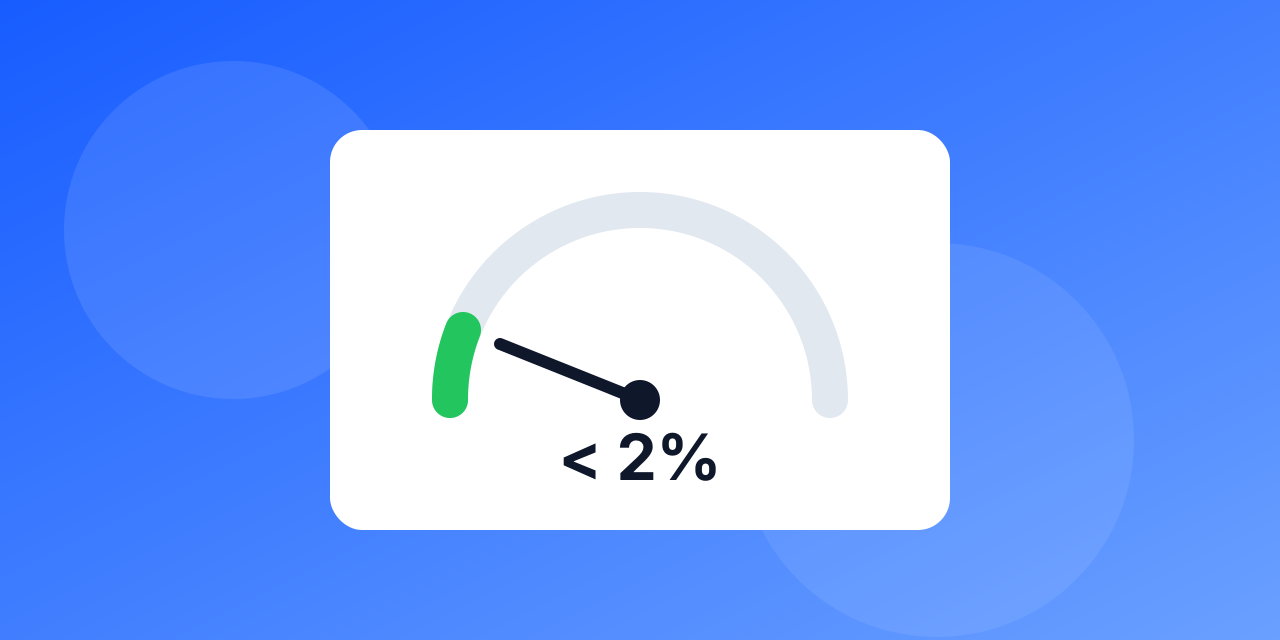
Bounce rate is the share of messages that could not be delivered. It looks like a housekeeping metric, but providers use it to judge whether you know your audience.
What is a healthy rate
A common rule of thumb is a hard bounce rate below 2% per campaign. Anything above 5% is a warning sign, and above that you risk throttling or blocks.
What pushes it up
- Old lists that were never cleaned
- Typos and fake addresses from sign-up forms
- Purchased or scraped lists
- Imports from events and partners
Why it matters now
With stricter provider rules, a bounce spike is no longer a minor nuisance. It can lower your reputation for every message you send afterwards, including transactional mail.
How to bring it down
- Verify the list with an email checker or the bulk verifier.
- Remove hard bounces after every send.
- Add real-time checks to sign-up forms.
- Re-check inactive contacts before big campaigns.
Measure it
Compare the bounce rate of the last three campaigns. A downward trend after cleaning is the clearest proof the effort paid off.
How to calculate it correctly
Bounce rate is hard bounces divided by messages sent, per campaign. Do not mix in soft bounces, which are temporary, and do not average across a year: a bad campaign last spring hides in the average and then repeats.
A short example: you send 40,000 messages and 1,200 hard bounce. That is 3%, above the 2% that most guidance treats as the line to stay under. A cleaning pass that removes 900 of those addresses would bring the next send to about 0.75% on the same list size.
Where bounces usually come from
- Old contacts that have not been mailed for months.
- Typos entered at sign-up with no check.
- Imported or purchased data with unknown quality.
- A source that changed, for example a new form or event sheet.
Look at which source a bounced address came from. Fixing the source is worth more than removing the individual addresses.
A simple response plan
- Under 1%: healthy. Keep verifying new sign-ups.
- 1% to 2%: watch. Clean before the next large send.
- Above 2%: stop and verify the whole list before sending again.
Tools
Use the bulk verifier before a campaign and the email checker at sign-up, so the number never gets high in the first place.
Benchmarks to keep in mind
For a cleaned list, a bounce rate under 2% is a good target. Between 2% and 5% deserves attention. Above 5% on a regular basis is a warning that providers may notice and that your sending tool may act on.
How to bring it down in a week
- Export the list and verify it with the bulk verifier.
- Remove invalid addresses and send to the valid group only.
- Leave accept-all and risky addresses for a second, small send.
- Add verification to your sign-up form so new bad addresses do not come in.
- Re-check the numbers after the next send.
Why the trend matters more than one number
A single high rate after an import is a problem to fix. A slow climb over months is a sign that the list is decaying and that your cleaning routine is too rare. Plot the bounce rate of each campaign on one chart and you will see which it is.
Do not forget the complaint rate
Bounces are only one of the numbers providers watch. Keep complaints very low as well, with a visible unsubscribe link and mail that people expect.
A bounce budget for each send
Decide before the send what rate you will accept, for example one percent, and what you will do if it is exceeded: stop, check the list segment and resume only after fixing the cause. Having the rule in advance prevents the usual mistake of finishing a bad send because stopping felt awkward.